Coping with the Psychological Impact of the Los Angeles Wildfires
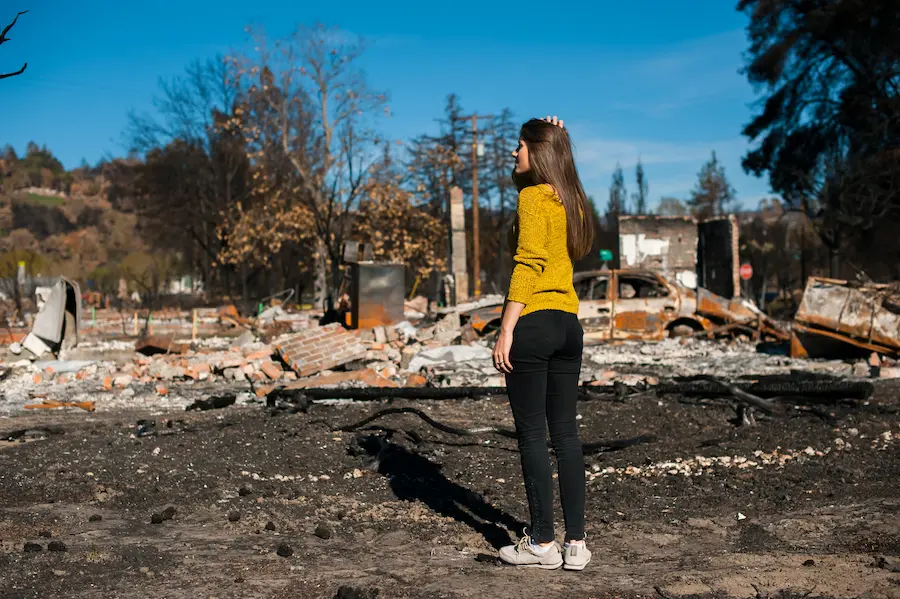
Wildfires in Los Angeles create a landscape of profound loss and uncertainty that challenges the mental resilience of individuals, families, and entire communities. The scale of destruction often feels unimaginable, leaving people to grapple with a grief that is both immense and difficult to define. This article explores practical psychological strategies, grounded in established theory, to navigate the aftermath of such a disaster and foster resilience during recovery.
When a crisis shatters the familiar world, the path forward becomes clouded. People may find themselves stuck, unable to process what has happened or envision a future. The concepts discussed here are designed to provide a framework for understanding these complex emotions and taking constructive steps, even when nothing feels certain.
Understanding Ambiguous Loss in Disaster Recovery
The psychological theory of Ambiguous Loss, developed by Dr. Pauline Boss, offers crucial insight for survivors of catastrophic events like the LA fires. This framework addresses losses that lack clarity or resolution, situations where what is gone and what remains are painfully unclear. In the wake of a wildfire, people mourn not just physical possessions, but a sense of safety, community, and a predictable future—losses that are often intangible and therefore harder to grieve.
This ambiguity can freeze the natural grieving process. Without a clear endpoint or a societal script for such a disaster, individuals might oscillate between moments of numb denial and overwhelming re-experiencing of the trauma. Recognizing this state of chronic stress and unclear coping mechanisms is the first step toward managing it, allowing people to acknowledge the unique difficulty of their situation without judgment.
Normalizing Ambivalence and Confusion
A critical step in coping is to directly name the experience as one of deep uncertainty. It is normal and expected to feel disoriented, hopeless, or utterly overwhelmed after an event of this magnitude. No one is prepared for the totality of such a loss. Labeling these feelings as part of an “ambiguous” situation helps validate them, reducing the additional stress of feeling like one is not reacting “correctly.”
Ambivalence is a common response. One moment, a person might engage with recovery tasks, making the disaster feel real and immediate. The next, they might avoid thinking about it entirely, a psychological retreat that offers temporary respite. Sharing this internal conflict with trusted others—acknowledging that these swings are a normal part of facing the unprecedented—can foster connection and begin the process of accepting a new, altered reality.
Navigating Diverse Perspectives and Conflict
In times of crisis, people process information and stress differently. Family members and friends will inevitably have varying viewpoints on the situation, the implications for the future, and the best course of action. Questions about immediate safety, insurance, relocation, and long-term rebuilding will arise, often leading to heated discussions.
To prevent isolation, it is vital to create a space where differing opinions can be heard without escalating into debate. The goal is understanding, not unanimity. Using a phrase like, “It’s okay if we don’t see this the same way right now,” can de-escalate tension. Tools from relationship experts like Drs. John and Julie Gottman can be invaluable:
- Expressing Needs Clearly: Using “I” statements to communicate personal feelings and needs without blaming others.
- Active Listening: Focusing on understanding the other person’s perspective before formulating a response.
- Empathy Building: Making a genuine effort to feel what the other person is feeling, even without agreeing with their conclusion.
This practice of empathetic communication encourages flexible thinking, which is essential for adapting to the ever-changing challenges of post-disaster life.
Reconstructing Routines and Rituals
While the instinct might be to let daily structures fall away amidst the chaos, maintaining or creatively adapting routines and rituals is a powerful stabilizing force. Routines provide a predictable framework for the day, reducing the mental load of constant decision-making and helping both children and adults function. If a routine like the school day is disrupted, creating a new, simple daily schedule can restore a sense of order.
Rituals, the meaningful practices that connect us, are equally important. A weekly family dinner, a birthday celebration, or a spiritual practice may feel difficult or inappropriate, but abandoning them can deepen a sense of loss. The key is reconstruction, not cancellation. This could mean holding a virtual gathering with displaced friends, having a quiet, low-key birthday acknowledgment, or establishing a new ritual, like a daily check-in, to provide needed support. These acts reinforce connection when it is most needed.
Finding Meaning and Purpose
In the face of senseless tragedy, the human search for meaning becomes paramount. Some may find explanation within their spiritual or philosophical beliefs. Dr. Boss notes that even concluding a disaster is utterly senseless is, in itself, a form of making meaning—it is an honest reckoning with reality.
Viktor Frankl, a Holocaust survivor and psychiatrist, observed that finding purpose is central to enduring suffering. In the aftermath of the fires, meaning can be actively built through action. This might involve helping a neighbor, volunteering in community recovery efforts, or simply committing to acts of kindness. Choosing how to respond, and aligning actions with personal values, can instill a sense of agency and purpose that fuels perseverance through the long process of coping and rebuilding.
Living through the Los Angeles wildfires requires navigating a prolonged state of uncertainty. By understanding the nature of ambiguous loss, normalizing complex emotions, fostering open communication, rebuilding daily structures, and seeking personal meaning, individuals and communities can cultivate the resilience needed not just to survive, but to gradually rebuild their lives.
Disclaimer: This article is for informational purposes only and does not constitute medical, psychological, legal, or professional advice.